BioDesign Studio
A permanent exhibition on synthetic biology at The Tech Interactive. A working biological design lab on the museum floor, with tangible-tabletop microbe simulators, live cell-culture stations, and visitor-runnable design tools.
- Project Director, Concept, Development Lead, Evaluation
- The Tech Interactive (institutional), San Jose
- 2013–2017
- San Jose, CA
- Biodesign and synthetic biology
- Completed
What it is. A permanent exhibition at The Tech Interactive in San Jose, built around the proposition that synthetic biology should be visible, hands-on, and design-able by the public, not hidden behind biosafety cabinets and paywalled journals. AAM Silver MUSE (2017), D&AD Wood Pencil (2017), Core77 Runner-Up (2017).
The brief. Biology education at the K-12 and public level had stayed locked in a 1990s model of cell diagrams, agarose gels, and “isn’t DNA cool” framing. Synthetic biology had become a working engineering discipline, but the public encounter with it was still defined by science-fair aesthetics. Meanwhile, an emerging community-bio movement was building real labs in garages and warehouses without an institutional bridge.
Our role. Project Director, Concept, Development Lead, and Evaluation on the Tech Interactive side. The interactive build came from a partnership with Local Projects in New York. The exhibition opened on March 18, 2016. The tabletop tangible work was a direct collaboration with Orit Shaer’s HCI Lab at Wellesley, which produced three peer-reviewed ACM papers with co-authors Anastasia Loparev, Lauren Westendorf, Madeleine Flemings, Jeffrey Cho, and Anja Scholze. MycoWorks contributed content for the mycelium-design tables. The result was a working biological design lab on the museum floor with live cell-culture stations, programmable-bacteria visualizations, tangible-tabletop microbe-design tools, and curated drop-in experiences from real-world bioengineering practice.
Described as the world’s first synthetic biology learning lab, one juror called this installation “brave and daring” for taking on a complex scientific subject and turning it into a visually appealing, engaging learning experience.
Source: American Alliance of Museums, 2017 MUSE Awards (Silver, Interpretive Interactive Installations).
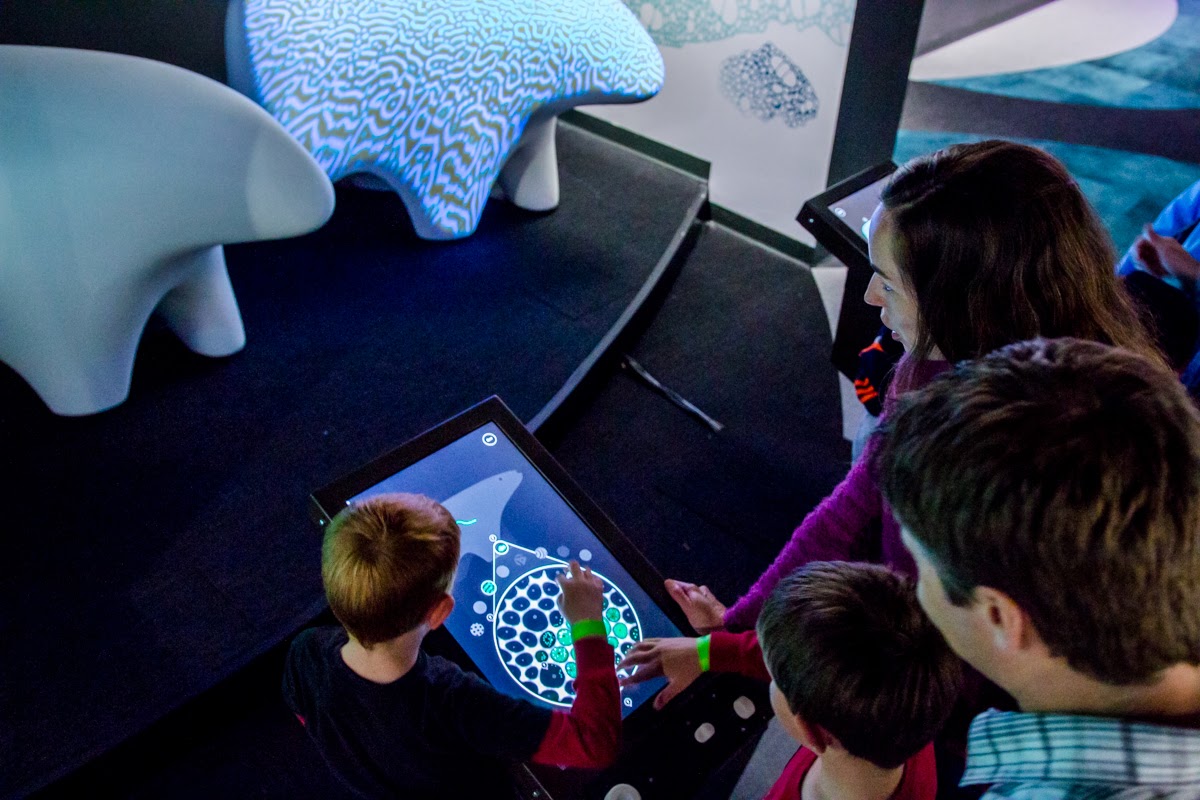
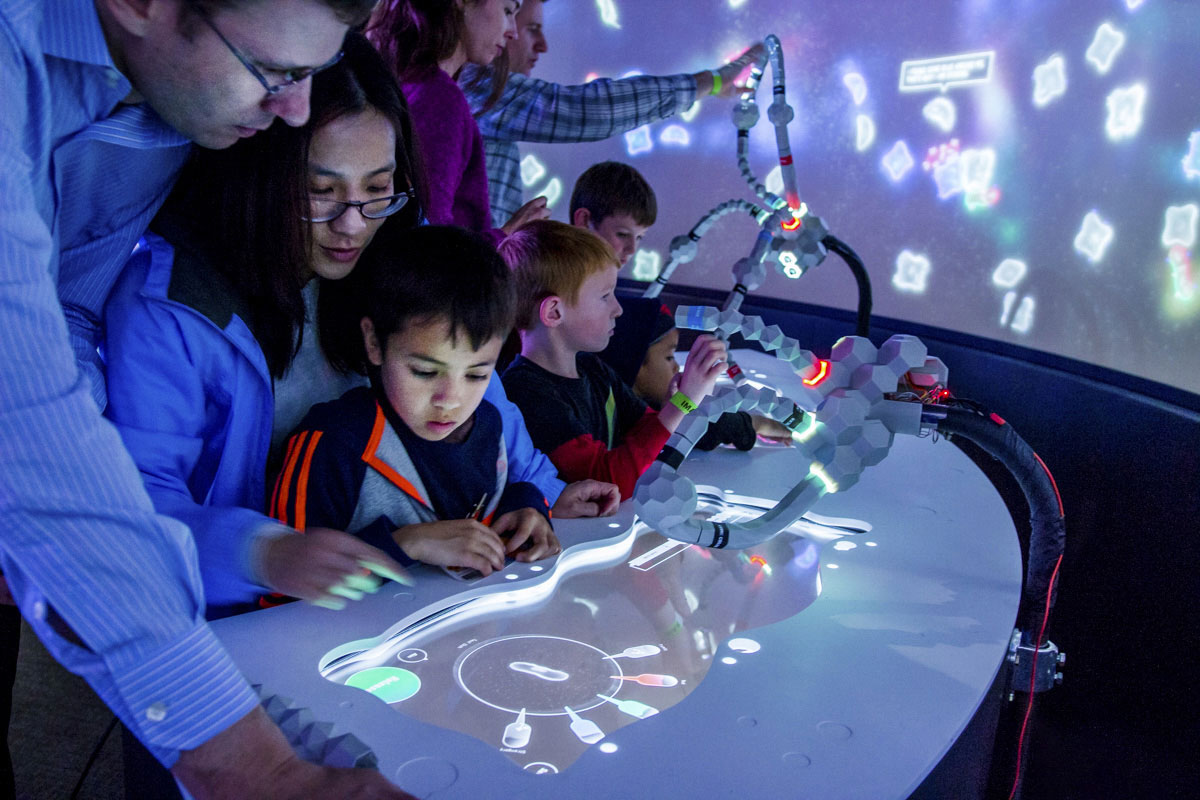
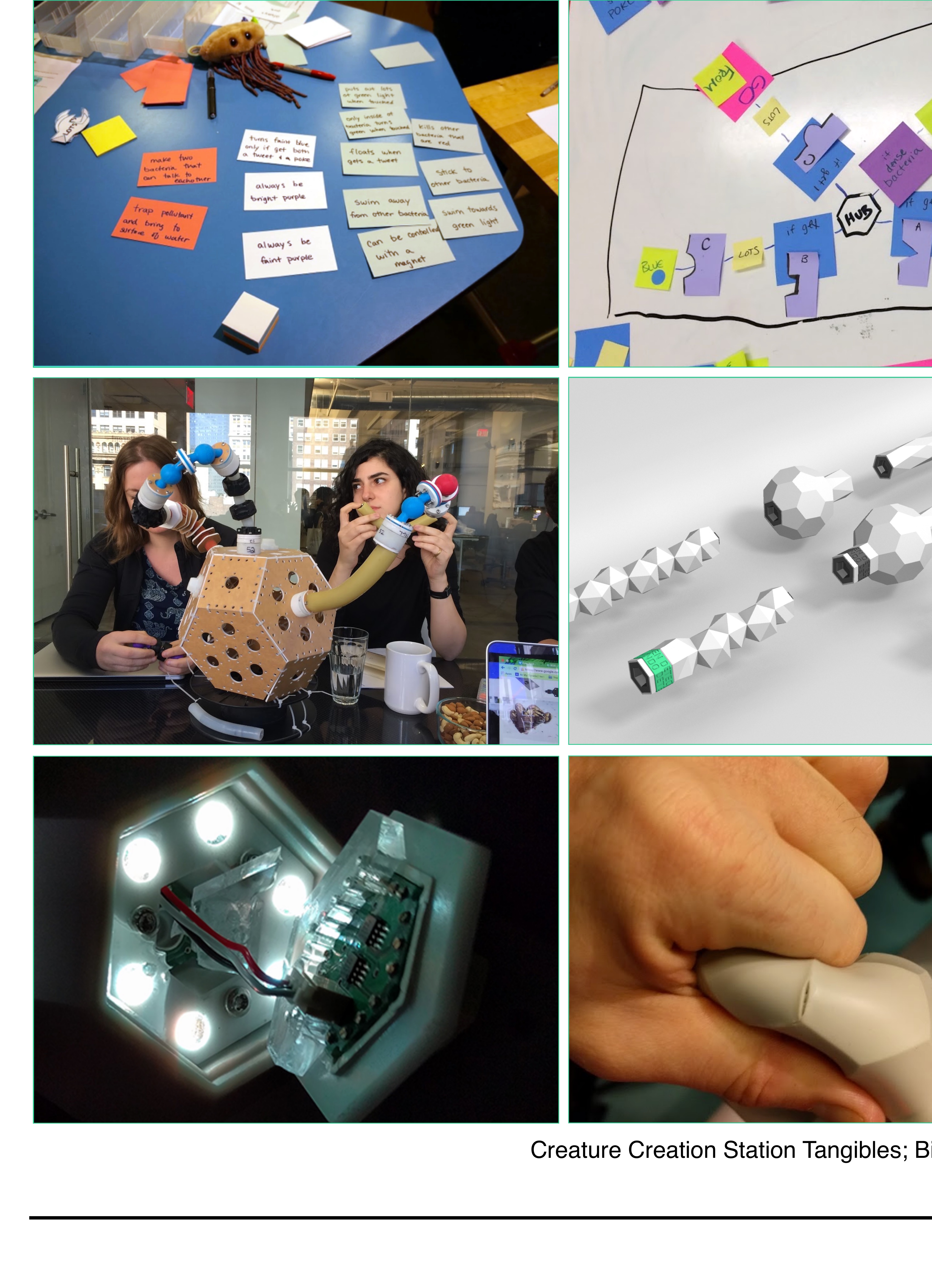
The three core hands-on stations. Three stations carry most of the visitor interaction, each documented as its own case study: Creature Creation Station (design a synthetic creature, release it onto a shared ecosystem wall), Living Colors Lab (program bacteria for pigment; the SynFlo research lineage), and Pattern Emergence (manipulate the rules of biological pattern formation at body scale).
Awards
- AAM MUSE Award, Silver, Interpretive Interactive Installations (2017)
- Core77 Design Awards Runner-Up, Interaction (2017)
- D&AD Wood Pencil, Spatial / Experiential Design (2017)
Publications
- Loparev, A., Westendorf, L., Flemings, M., Cho, J., Littrell, R., Scholze, A., & Shaer, O. (2017). BacPack: Exploring the role of tangibles in a museum exhibit for bio-design. Proceedings of TEI '17, 111–120. ACM.
- Loparev, A., Westendorf, L., Flemings, M., Cho, J., Littrell, R., Scholze, A., & Shaer, O. (2016). BacPack for New Frontiers: A tangible tabletop museum exhibit exploring synthetic biology. Proceedings of ACM ISS '16.
- Okerlund, J., Segreto, E., Grote, C., Westendorf, L., Scholze, A., Littrell, R., & Shaer, O. (2016). SynFlo: A tangible museum exhibit for exploring bio-design. Proceedings of TEI '16, 141–149. ACM.
Collaborators
- The Tech Interactive, institutional home
- Local Projects, interactive design and build partner (NYC)
- Wellesley HCI Lab (Orit Shaer's group), academic research partner on tangible-tabletop pieces (BacPack, BacPack for New Frontiers, SynFlo)
- MycoWorks, content partner, mycelium-design tables
Press and references
Related work
-
BioDesign Studio: Creature Creation Station
Visitors combine tangible bio-element tokens at a curved table to design a hybrid synthetic creature, which then animates in a shared projected ecosystem.
-
BioDesign Studio: Living Colors Lab
Visitors use tangible tokens to program bacteria to express pigment; successful designs accumulate on an RGB dot wall with a live count of dishes grown.
-
BioDesign Studio: Pattern Emergence
Visitors adjust the variables behind biological pattern formation on a tablet and project the resulting generative patterns onto a biomorphic sculpture.
-
Body Metrics
A permanent exhibition on wearable biometrics, biofeedback, and mindfulness at The Tech Interactive, San Jose. Visitors used real-time physiologic data to explore attention, stress, and emotional state. AAM Gold MUSE Award (2016).
-
BioForge — DIYbio at MICROWAVE 2011
A public hands-on DIYbio genomic-exploration installation led for the MICROWAVE International New Media Arts Festival in Hong Kong, on behalf of the UCLA Art|Sci Center. Romie's name for it was BioForge.