Body Metrics
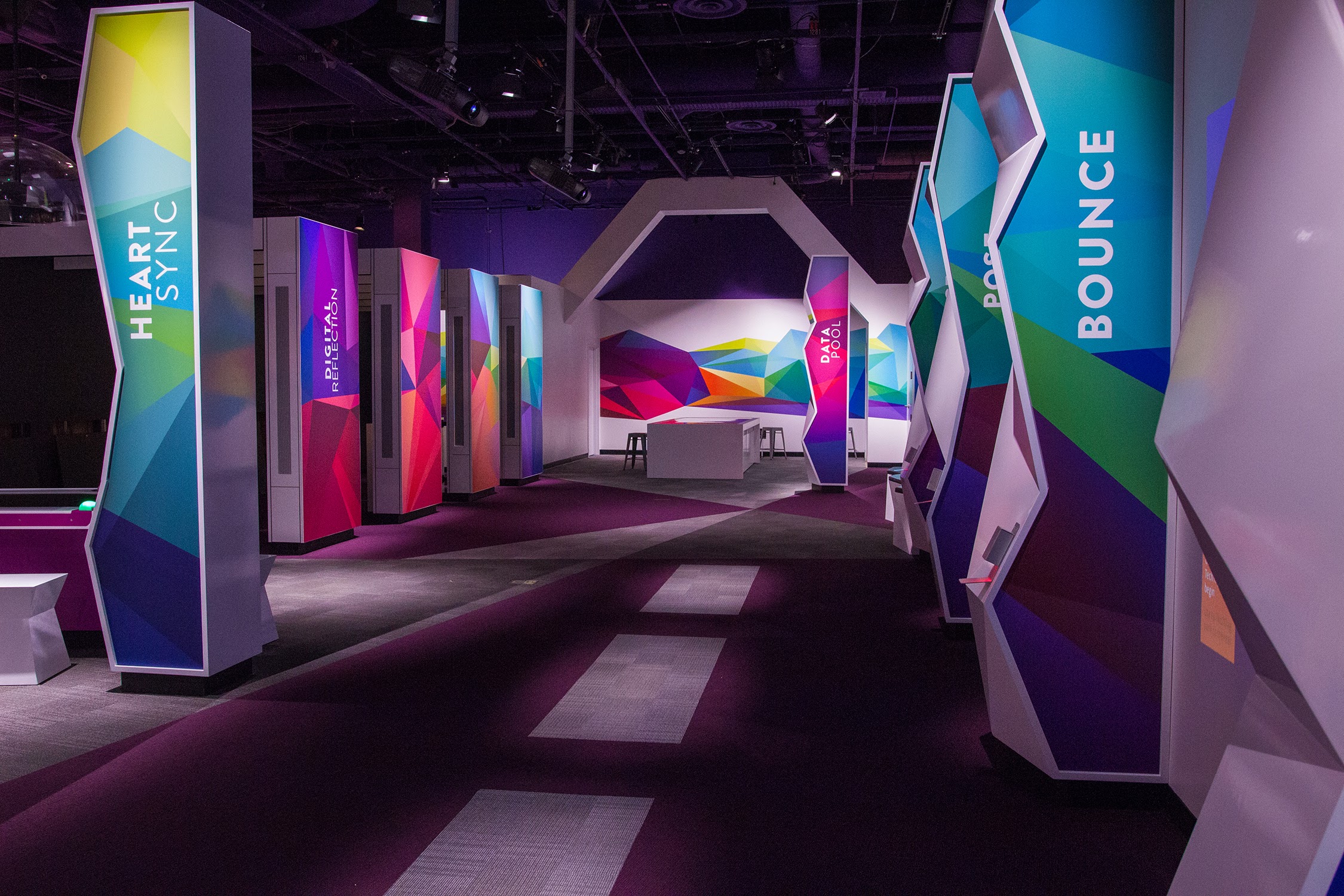
A permanent exhibition on wearable biometrics, biofeedback, and mindfulness at The Tech Interactive, San Jose. Visitors used real-time physiologic data to explore attention, stress, and emotional state. AAM Gold MUSE Award (2016).
- Concept, Development Lead, Evaluation
- The Tech Interactive (institutional), San Jose
- 2013–2016
- San Jose, CA
- Health-experience design
- Completed
What it is. A permanent exhibition at The Tech Interactive in San Jose that gave visitors direct, hands-on access to wearable physiological sensors and used the resulting data as the substance of the experience. Open since 2016. AAM Gold MUSE Award (2016). Presenting sponsor was Kaiser Permanente, supporting the Human Data and Body Metrics arc.
The brief. A wave of consumer wearables had landed but most public framing of them was either consumer-marketing (steps, sleep, heart rate) or science-press (cool studies, abstract). Almost nobody was making an experiential bridge between the body’s signals and what someone might do with that information. The behavioral-science research existed. The design language for translating it to the public did not.
Our primary motivation was to develop this exhibition to improve the health and wellness of our community. Body Metrics stands apart from most health exhibitions because of The Tech’s strong emphasis on making and doing.
Source: American Alliance of Museums essay on the Body Metrics exhibition, 2015.
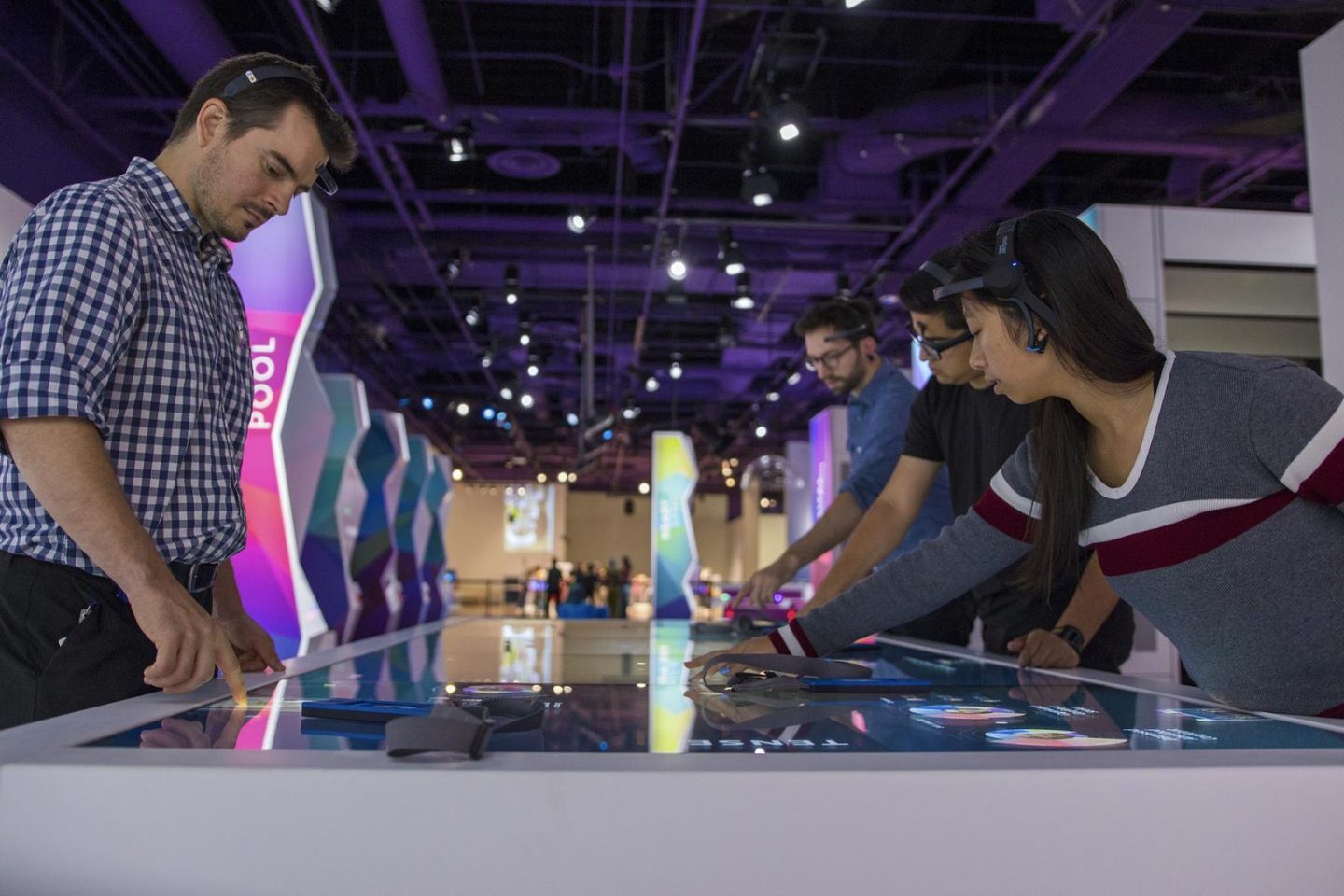
Our role. Concept, Development Lead, and Evaluation. The Tech’s exhibitions team built the project across about three years with a roughly 50-person cross-functional staff. The interactive design and build partnership was with Local Projects in New York. Heart-rate variability, electrodermal activity, breathing patterns, and attention measures were rendered into visualizations visitors could see, manipulate, and reflect on. We paired direct biofeedback with structured mindfulness prompts and small-group exercises. Content partnerships came from academic and industry research labs across the wearable-biometrics field.
Station case study. Digital Reflection is documented on its own page: the station that rendered a visitor’s signals into a personal radial profile and then put it next to other visitors’ for a similarity reading.
Awards
- AAM MUSE Award, Gold, Interpretive Interactive Installations (American Alliance of Museums, 2016)
Funding
- Kaiser Permanente, presenting sponsor (Curator (Tech Interactive institutional grant))
Collaborators
- The Tech Interactive, institutional home and exhibitions team
- Local Projects, interactive design and build partner
Press and references
Related work
-
Body Metrics: Digital Reflection
Visitors wore a biometric sensor band that turned their physiological and emotional signals into a personal radial profile, then showed how closely it matched other visitors'.
-
BioDesign Studio
A permanent exhibition on synthetic biology at The Tech Interactive. A working biological design lab on the museum floor, with tangible-tabletop microbe simulators, live cell-culture stations, and visitor-runnable design tools.
-
HEAL Institute
Resident pavilion at Dubai's Museum of the Future, a 2071 institute regenerating damaged ecosystems through bioengineering. Part of an Atelier Brückner-led complex, spanning planetary health to personal wellbeing, that won a Blooloop Innovation Award in 2024.